


Know Your Teeth
Every tooth is made up of several distinct parts, and different teeth are shaped for different jobs – understanding the basics can make it easier to follow what's happening at your next check-up.
Q: What are the different parts of a tooth?
The part of the tooth you can see is called the crown, and the rounded high points on the back teeth are called cusps. The hard, white outer layer covering the crown is the enamel – the hardest substance in the body. Below the gumline, the root anchors the tooth into the jawbone, and can't be seen directly. Inside the tooth is the dentin, a bone-like tissue, and at the centre is the pulp, which houses the nerves and blood vessels that keep the tooth alive.
Q: Why do teeth have different shapes?
Teeth are shaped for specific jobs, and the upper and lower teeth of the same type work together when you bite, chew and tear food:
• Incisors – eight in total, four upper and four lower, at the front of the mouth. Sharp, chisel-shaped edges for cutting food.
• Cuspids (canines) – four in total, next to the incisors. Pointed edges for tearing food.
• Premolars (bicuspids) – four pairs, next to the cuspids. Used for crushing and tearing.
• Molars – twelve in total, in sets of three at the back of the mouth. Wide surfaces for grinding food.
Q: How many teeth do adults have?
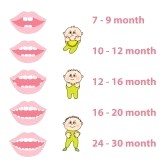
Adults typically have 32 teeth in a full adult set. Children have fewer, since baby (primary) teeth are gradually lost and replaced as the adult teeth grow in underneath.
Q: Do teeth do more than just chew?
Yes – teeth play a big role beyond chewing. They help you speak clearly, since many letters of the alphabet can't be pronounced properly without the help of your teeth and the shape of your dental arch. Teeth also help support the structure and shape of your face. Keeping them clean and healthy contributes not just to how your smile looks, but to your overall health and wellbeing too.